Rice Harvest Season in Hoi An: When & Where to See Golden Rice Fields
Twice a year, the countryside surrounding Hoi An transforms into one of Southeast Asia’s most visually striking landscapes. Rice harvest season in Hoi An turns flat paddy fields into sweeping sheets of gold, drawing photographers, nature travelers, and curious visitors from around the world. The air carries the clean scent of cut grass, farmers move methodically through the rows, and the low morning light catches every grain with cinematic precision. Whether you are planning a dedicated photography trip or simply want to experience rural Vietnamese life up close, timing your visit around the golden rice fields of Hoi An is one of the most rewarding decisions you can make.
When is Rice Harvest Season in Hoi An?
Hoi An’s agricultural calendar follows two distinct planting and harvesting cycles per year. Understanding these cycles is essential for anyone seeking the best time to visit Hoi An rice paddy landscapes at their visual peak.
Spring Harvest: March–April
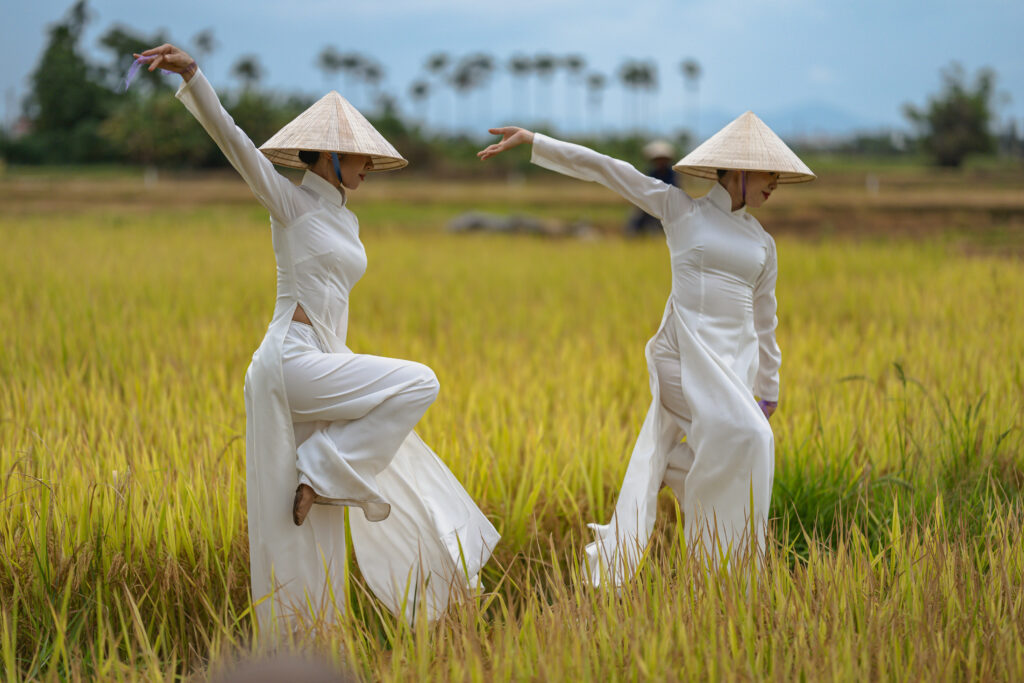
The spring harvest is widely considered the more photogenic of the two seasons. Planted in late January or early February after the Lunar New Year, the rice reaches full maturity by March and April, when the paddies shift from vibrant green to a deep, saturated gold. Weather conditions during this period are generally favorable — humidity is moderate, rainfall is minimal, and skies tend to alternate between soft overcast light and clear blue backdrops that complement the golden fields beautifully.
For photographers, the Hoi An March–April window offers some of the most consistent natural light of the year. Mornings are cool, mist occasionally lingers near the water’s edge, and golden hour arrives early enough to allow multiple shooting sessions before the midday heat sets in. This is the season that produces the iconic images most commonly associated with rural Hoi An.
Autumn Harvest: September–October
The second harvest falls between September and October, following a planting cycle that begins in late June or July. While equally spectacular in terms of color, the autumn season comes with a caveat: it overlaps with the tail end of central Vietnam’s rainy season. Afternoon showers are common, and occasional flooding can affect access to certain field areas.
That said, the autumn harvest offers its own rewards. Dramatic skies, reflective water in partially flooded paddies, and fewer tourists create a different but equally compelling atmosphere. Travelers who visit during this window often find a more intimate experience with the landscape and local farming communities.
Why Harvest Season is the Best Time to Visit
Outside of harvest season, rice paddies are either bare soil, flooded planting beds, or uniformly green. The transition to gold is brief — typically lasting two to three weeks before cutting begins — which makes timing critical. During this window, the golden rice fields of Hoi An become a living, working landscape rather than a static backdrop.
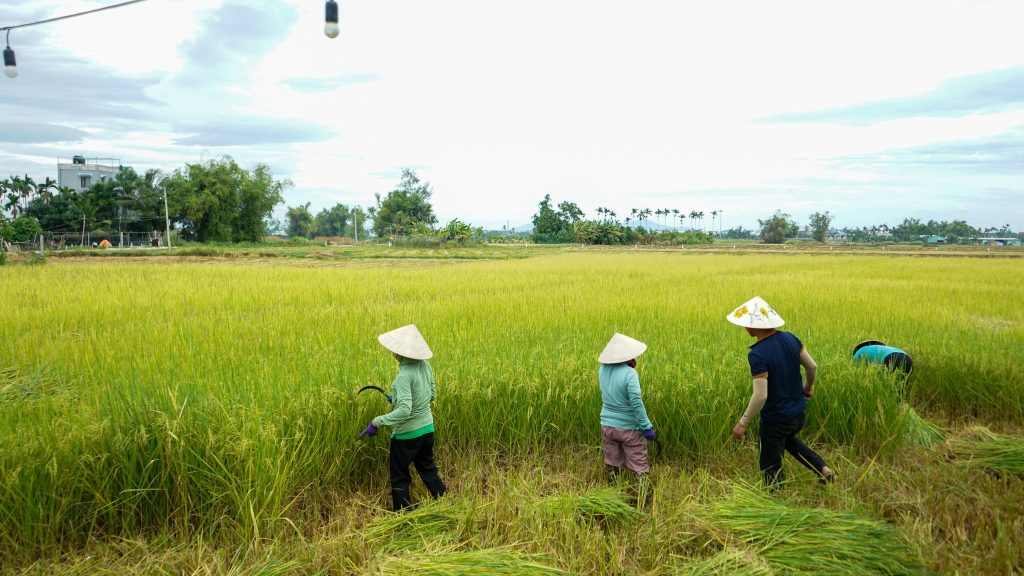
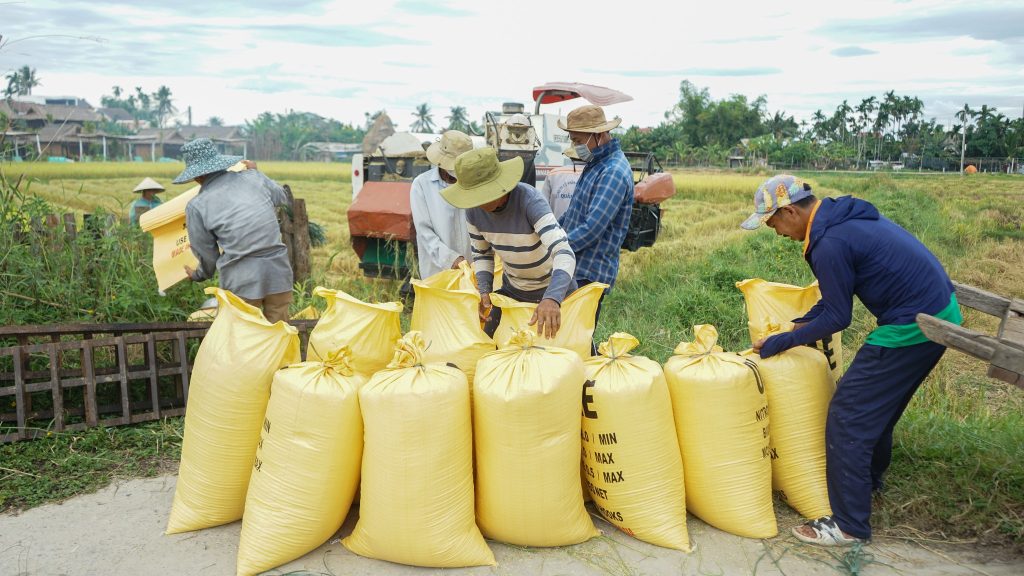
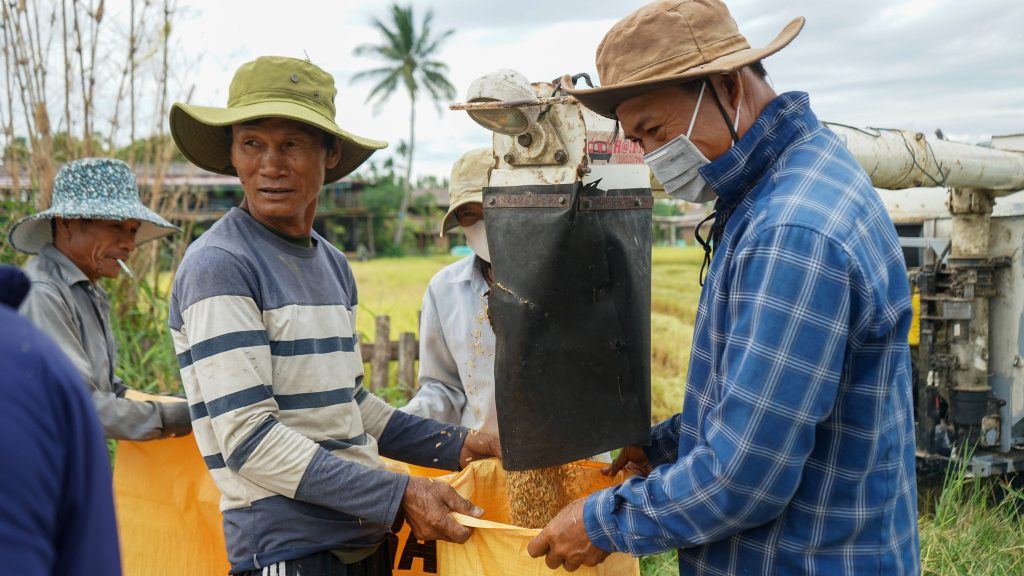
Harvest season also brings a level of human activity that enriches any visit. Farmers work from early morning, often using traditional hand-cutting methods alongside small mechanical harvesters. The sounds, rhythms, and visual textures of active agriculture add depth to photographs and provide a genuine cultural encounter that standard tourist itineraries rarely include. For travelers seeking authenticity, this brief seasonal window is unmatched.
Best Places to See Golden Rice Fields Near Hoi An
Several locations around Hoi An offer access to rice paddy landscapes, but they vary significantly in terms of accessibility, view quality, and overall experience.
Chillax Eatery & Hangout
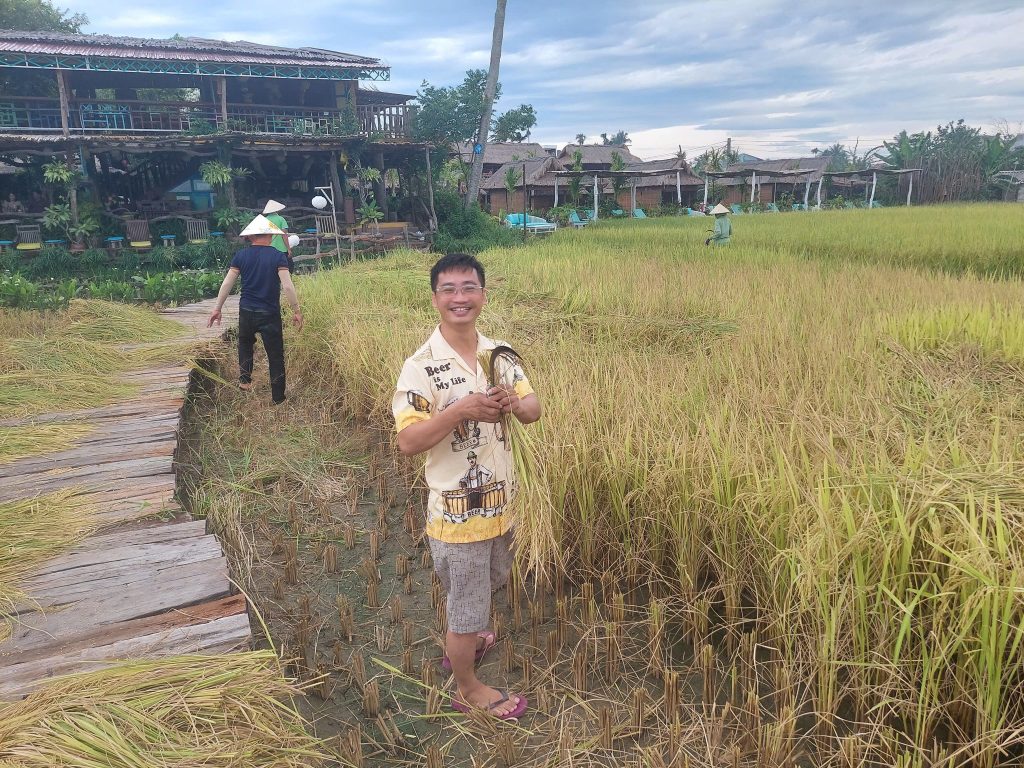
Chillax Eatery & Hangout stands apart from other rice field viewing spots in the Hoi An area for one straightforward reason: it places you directly within the landscape rather than at its edge. The venue sits alongside approximately 3,000 square metres of working golden paddy, meaning that during harvest season, the fields are not a distant feature visible from a roadside — they are immediately present, surrounding the seating areas on multiple sides.
The layout of the space has been designed with the landscape in mind. Seating options range from ground-level cushioned areas that position you at eye level with the rice stalks to elevated platforms that provide a broader panoramic view across the fields. This variety makes it suitable for casual visitors who simply want to sit with a coffee and absorb the scenery, as well as photographers who need specific angles and framing options.
During the spring harvest in March and April, the paddy immediately adjacent to Chillax reaches peak golden color, and the combination of the natural setting, the venue’s rustic aesthetic, and the working farmland creates a layered visual environment that is difficult to replicate elsewhere. Staff at the venue are familiar with harvest timing and can provide accurate updates on field conditions throughout the season.
Beyond the visual experience, Chillax functions as a full-service eatery and hangout space, offering food, beverages, and a relaxed atmosphere that encourages extended stays. Rather than a quick roadside stop, a visit here becomes a half-day or full-day experience. For those interested in exploring the space in detail, the Our Space & Experience page provides a comprehensive overview of what to expect.
Cam Thanh Village
Cam Thanh Village, located a short distance southeast of Hoi An’s Ancient Town, is one of the most photographed rural areas in the region. The village is known for its nipa palm-lined waterways and traditional basket boat culture, but during harvest season, the surrounding paddies add a golden dimension to an already scenic landscape. The combination of water, palms, and ripening rice creates a layered composition that rewards wide-angle photography.
Access is straightforward by bicycle or motorbike, and the village itself offers a glimpse into daily rural life that complements the natural scenery.
Route to An Bang Beach
The road connecting Hoi An’s Ancient Town to An Bang Beach passes through a stretch of active agricultural land that, during harvest season, becomes one of the most casually accessible golden rice field corridors in the area. Cyclists traveling this route in March or April will find themselves moving through open paddy landscapes with minimal traffic and excellent natural light in the early morning.
This route is particularly well-suited for travelers who want to incorporate rice field scenery into a broader day itinerary that includes the beach.
Photography Tips for Rice Harvest Season
The Hoi An rice field photography experience rewards preparation. A few targeted adjustments to timing, positioning, and camera settings can significantly improve results.
Golden Hour Timing
The two most productive windows for rice field photography are the hour after sunrise and the hour before sunset. During these periods, low-angle light rakes across the paddy surface, emphasizing texture and depth while saturating the golden color of the grain heads. Midday light, by contrast, flattens the landscape and washes out the color differentiation between stalks.
In March and April, sunrise in Hoi An occurs around 5:45–6:00 a.m. Arriving at your chosen location by 5:30 a.m. ensures you are positioned before the light becomes active.
Best Angles at Chillax
At Chillax Eatery & Hangout, the most effective compositions typically involve low shooting positions that place the rice stalks in the foreground against either the open sky or the venue’s natural wooden structures. The 3,000m² paddy provides enough spatial depth to create strong leading lines, and the proximity of the seating areas to the field edge allows for intimate close-up framing without requiring entry into the working paddy itself.
Camera Settings for Rice Fields
For digital cameras, a starting point of ISO 100–200, aperture f/5.6–f/8, and shutter speed adjusted for ambient light works well in most harvest season conditions. A polarizing filter reduces glare from water surfaces and deepens sky contrast. For smartphone photographers, enabling HDR mode and using manual exposure compensation to protect highlights in bright golden fields will improve overall image quality.
What Else to Do During Harvest Season
Harvest season visits pair naturally with several other Hoi An experiences. The Ancient Town remains accessible year-round and is best explored in the early morning before the rice fields reach peak light. Cooking classes that incorporate locally grown rice are widely available and take on additional meaning when visited during the harvest period. Bicycle tours through the surrounding countryside allow visitors to move between multiple paddy locations in a single morning.
For those based near Cam Thanh, basket boat tours on the palm-lined waterways offer a water-level perspective on the agricultural landscape that complements ground-level field photography.
Practical Planning for Your Visit
Harvest timing varies slightly year to year depending on planting schedules and weather. The spring harvest window of mid-March to mid-April is the most reliable target for first-time visitors. Booking accommodation in Hoi An at least three to four weeks in advance during this period is advisable, as it coincides with increasing tourist traffic.
Transportation to rice field locations is most flexible by bicycle or motorbike, both of which are available for daily rental throughout Hoi An. Most paddy locations, including Chillax, are within 10–15 minutes of the Ancient Town by bike.
Dress practically for field visits: light, breathable clothing, sun protection, and footwear suitable for uneven terrain are recommended. Early morning temperatures in March are mild, making pre-dawn starts comfortable.
Plan Your Rice Harvest Season Visit to Hoi An
The rice harvest season in Hoi An offers a rare combination of natural beauty, cultural authenticity, and photographic opportunity that is difficult to find elsewhere in Vietnam. The window is brief, the light is exceptional, and the experience of sitting within a working golden paddy landscape — particularly at a venue like Chillax Eatery & Hangout — is one that stays with visitors long after they leave.
Whether your priority is photography, cultural immersion, or simply a memorable afternoon in a remarkable setting, timing your trip around the golden rice fields of Hoi An is a decision worth making.
Ready to experience the golden fields for yourself? Explore the full Chillax space and experience to see what awaits, then book your visit and secure your spot before the harvest season fills up.